The Best Sheets for Airbnb and Short-Term Rentals: What Actually Survives 100 Guests
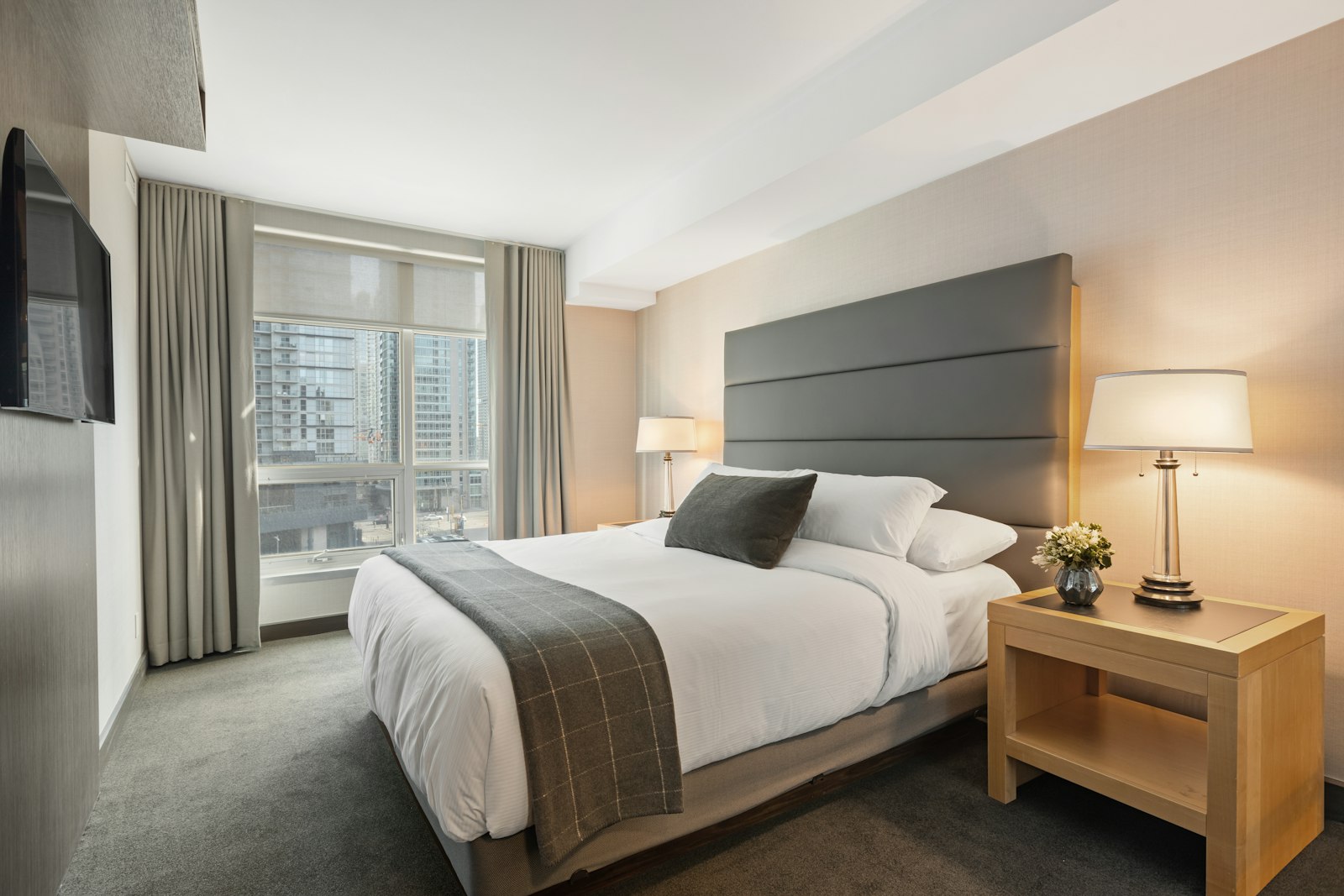
A practical spec for short-term rental hosts and property managers — the fabric, thread count, colour and rotation strategy that keeps turnover fast and five-star reviews coming.
Short-term rental bedding lives a brutal life. It gets washed after every two-night stay, bleached when a guest spills wine, tumble-dried hot because the cleaner has three more properties to hit that afternoon, and judged in a public review by someone who paid $220 a night. Retail bedding is not built for that. Here is what actually works.
The specification that survives
If you remember one line from this article, make it this one: white, 300TC combed cotton [percale](/products/bed-sheets), deep-pocket fitted, all-around elastic.
- White, always. Not because it looks luxurious — because it can be bleached. Colours fade unevenly across a fleet, and a mismatched bed reads "tired" in photos. White also lets you replace one piece without replacing a whole set.
- [Percale over sateen](/blog/percale-vs-sateen-vs-jacquard-explained). Percale breathes better, hides creases when pulled straight from the dryer, and survives high-heat industrial laundering far better than sateen.
- 300TC, single-pick, combed cotton. Higher thread counts trap heat and cost more without lasting longer. Below 200TC feels cheap to guests.
- 15-inch deep pockets. Rental mattresses are usually thick hybrid or pillow-top models. A shallow fitted sheet that pops off mid-stay is a guaranteed complaint.
- Double-needle hems. The hem is where sheets fail first.
Why cotton-polyester blends are tempting and usually wrong
A 50/50 poly-cotton blend costs less, wrinkles less and dries faster — which is genuinely attractive for a fast turnover. The trade-off is hand-feel and heat: blends sleep warmer and feel plasticky to guests who notice these things, and guests paying premium nightly rates notice.
A reasonable compromise for high-volume, mid-tier properties is 60/40 cotton-rich percale — most of the crispness, meaningfully faster drying. For premium listings, stay 100% cotton.
Duvet strategy: the hotel triple-sheet debate
Three approaches, each with real trade-offs:
- [Duvet with washable cover](/products/duvet-covers) — best guest experience, slowest turnover. Wrestling a king duvet into a cover eats 6–8 minutes per bed.
- Triple sheeting — flat sheet, blanket, flat sheet. Fast, fully washable, cheap. Reads slightly institutional in photos.
- Washable comforter with a coverlet — middle ground. Wash the coverlet every stay, the comforter monthly.
Most professional property managers running 10+ units land on duvet covers for premium listings and triple sheeting for volume listings.
The rotation math
The rule that saves money over five years: three sets per bed minimum, five sets for high-occupancy units.
- One on the bed
- One clean in the closet (so the cleaner never waits on laundry)
- One in the wash
- Sets four and five: rotation reserve and damage replacement
For a 12-unit portfolio with one queen bed each, that is 36–60 queen sets. The higher upfront spend lowers your cost per night, because each sheet rests between uses instead of being cycled continuously until it thins.
Washing protocol for your cleaning team
Write this on a laminated card and stick it above the machine:
- Wash whites at 60°C, separate from towels
- Half the recommended detergent dose — excess detergent is what makes sheets stiff and grey
- No fabric softener, ever — it coats fibres and kills absorbency
- Oxygen bleach weekly; chlorine bleach only on stains
- Tumble dry low until just barely damp, then straight onto the bed
- Never leave linen sitting in a stopped dryer
Over-drying on high heat is the single biggest destroyer of rental linen. It is also the hardest habit to break in a cleaning crew.
When to retire a set
Retire when you see hem tearing, a persistent grey cast that oxygen bleach will not lift, thinning at the hip and shoulder contact zones, or any visible stain. A guest who photographs a stained sheet costs you far more than the replacement.
Demote retired sets to cleaning rags or donate them — do not keep them "for emergencies." They will end up on a bed.
Budgeting per unit
Plan for $180–$320 per bed per year in linen replacement for a well-run unit at 70%+ occupancy, assuming a proper rotation and correct washing. Poor washing protocol doubles that number faster than any other single factor.
Buying at volume
Property managers running 10+ units are better off buying direct from a manufacturer than through retail. You get consistent shade matching across reorders (critical when you replace a single piece), correct pocket depths, and per-unit pricing that retail cannot approach.
Royal Mills supplies short-term rental operators, boutique hotels and property-management groups in the US with white 300TC percale sheet sets, duvet covers and pillowcases from our ISO 9001:2015 and OEKO-TEX Standard 100 certified facility in Ahmedabad, India, at MOQs suited to multi-unit portfolios. Request a quote with your unit count and bed sizes, or browse the bed sheet range.
Related pages
- White percale bed sheets — 300TC, deep-pocket, all-around elastic
- Duvet covers — hotel-style closures for fast turnover
- Pillowcases — Standard, Queen and King with tuck flaps
- Comforters and duvet inserts — washable, all-season fill weights
- Quilts and coverlets — top-of-bed layers that launder well
- Wholesale bed sheets — buying direct for multi-unit portfolios
- Hotel linen supplier program — spec, sampling and reorder consistency
- United States export program — delivery to US 3PLs and properties
Explore our bed-linen range
Popular categories buyers source from Royal Mills:
- Bed Sheets — 200TC to 1000TC
- Duvet Covers — 6 collections
- Pillowcases — Oxford & Housewife
- Custom & Private-Label Bedding